

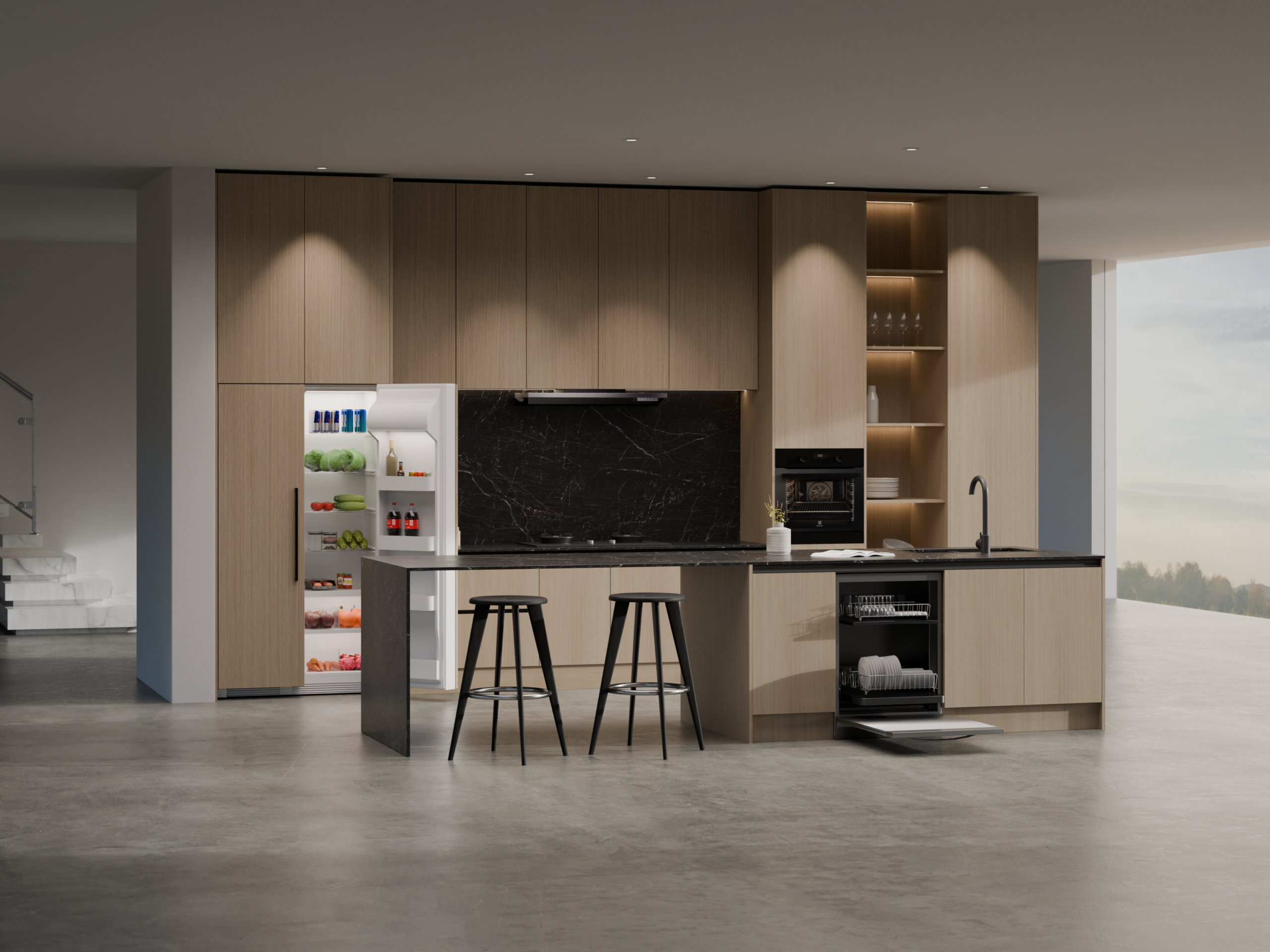
You probably cleaned your home this week.
But the air inside it may carry something you can’t see and barely smell: formaldehyde.
It comes from the furniture, cabinets and wall panels we use every day, and families with children, elderly relatives or asthma should take it seriously.
1. What is Formaldehyde?
Formaldehyde is a colourless gas with a sharp, pungent smell. It is a volatile organic compound (VOC), which means it evaporates easily and spreads through indoor air.
It is also widely used in industry.
Manufacturers use formaldehyde-based resins as glue to bond wood fibres into boards like MDF, particleboard and plywood. The glue is cheap and strong, which is why it’s everywhere.
The health concerns are well documented:
| Short term | it irritates the eyes, nose and throat and can cause coughing, headaches and breathing trouble. |
| Asthma and allergies | it can trigger or worsen symptoms, especially in children. |
| Long term | the International Agency for Research on Cancer (IARC) classifies formaldehyde as a known human carcinogen. |
2. Where does it release in your home?
The answer is: from the things you live with.
Panels bonded with formaldehyde resins emit formaldehyde as they cure and continue to do so over time from finished panels.
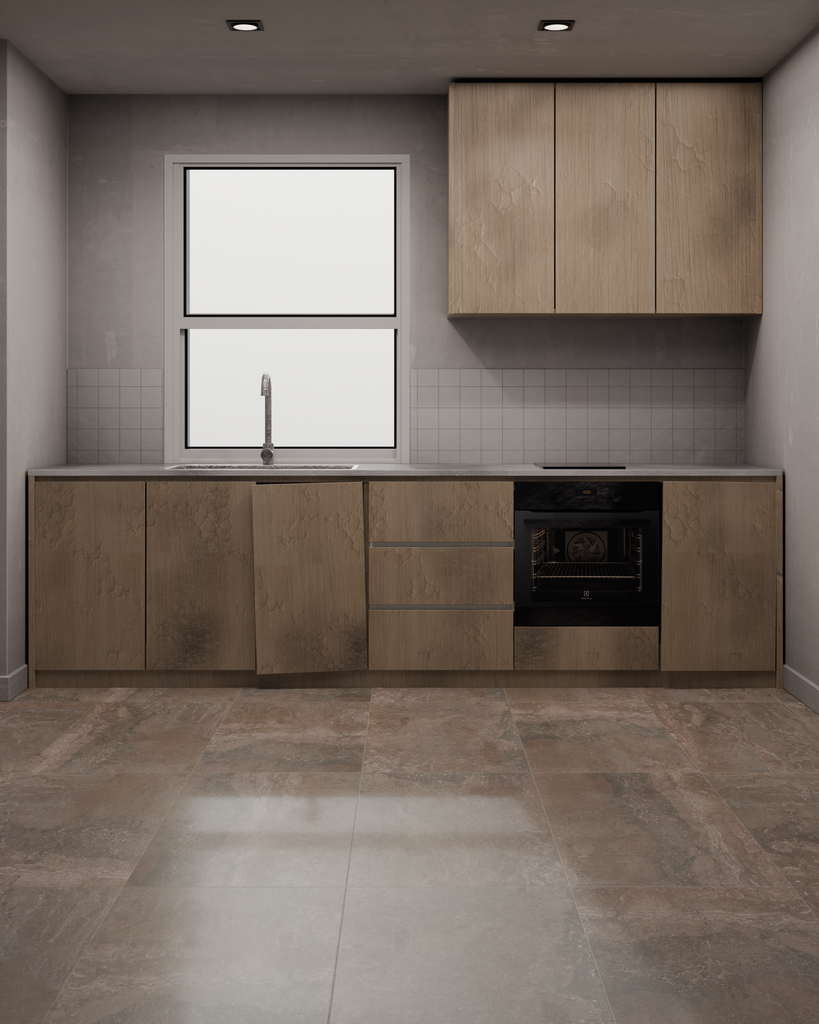
Common sources include:
- Wardrobes, kitchen cabinets and shelving made from MDF or particleboard
- Beds, desks and children’s furniture
- Wall panelling, doors and flooring
- Some glues, laminates and finishes
this process is called off-gassing, and it is worse in certain conditions:
- New products: emissions are highest in the first weeks and months.
- Heat and humidity: in a warm, humid climate like Malaysia’s, resins release more formaldehyde.
- Closed rooms: an air-conditioned bedroom with the door shut lets the gas build up where your family sleeps for eight hours a night.
What do the standards say?
Europe has some of the world’s strictest rules. For years, the benchmark was class E1, which allows up to 0.124 mg/m³ when tested under EN 717-1.
That limit is now being tightened:
From 6 August 2026, articles placed on the EU market must not exceed 0.062 mg/m³ for furniture and wood-based articles. That is half the old E1 threshold, and the new class is known as E05.
In short, Europe has decided the old “safe” level was not low enough. A panel that barely passed the old rules may not pass the new ones.
How AEROFLEX ® is different
AEROFLEX ® Panel is built for families who want to stop worrying about what’s in their walls and cabinets.
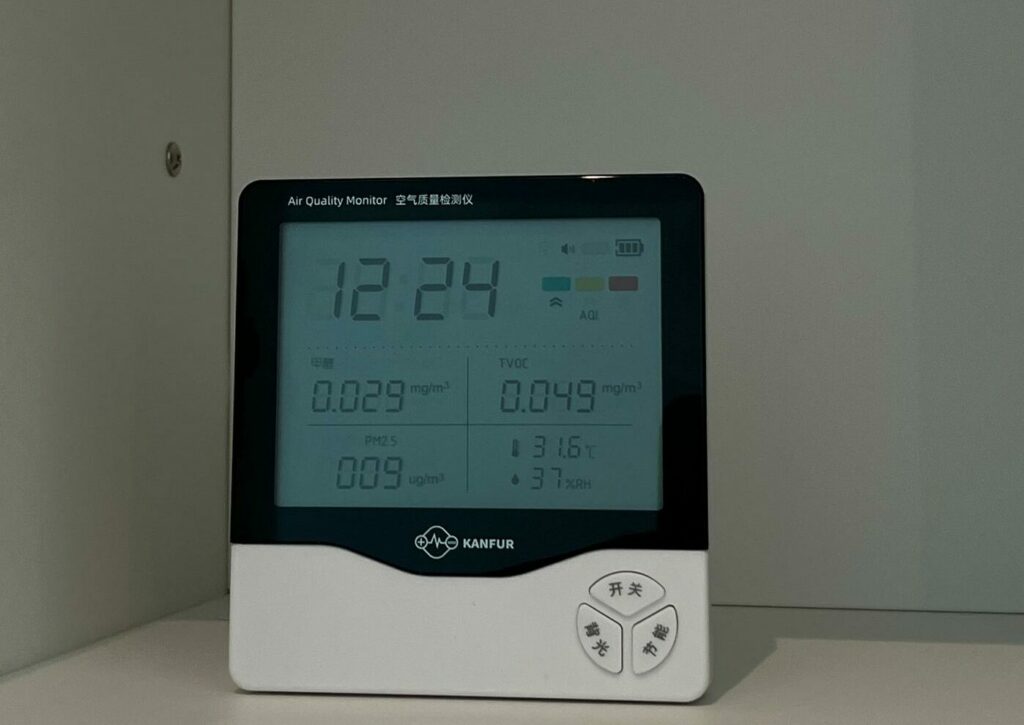
We tested the air inside a AEROFLEX ® cabinet.
We placed a air quality monitor inside an AEROFLEX ® cabinet. The conditions were 31.6°C and 37% relative humidity, which is a warm environment where emissions tend to be higher.
The formaldehyde reading was 0.029 mg/m³.
| Benchmark | Limit | AEROFLEX ® cabinet reading |
| Old EU class E1 | 0.124 mg/m³ | 0.029 mg/m³ |
| New EU E05 limit (from Aug 2026) | 0.062 mg/m³ | 0.029 mg/m³ |
That reading is more than 50% below the new EU E05 limit of 0.062 mg/m³. The same monitor showed total VOCs (TVOC) of 0.049 mg/m³ and PM2.5 of 9 µg/m³.
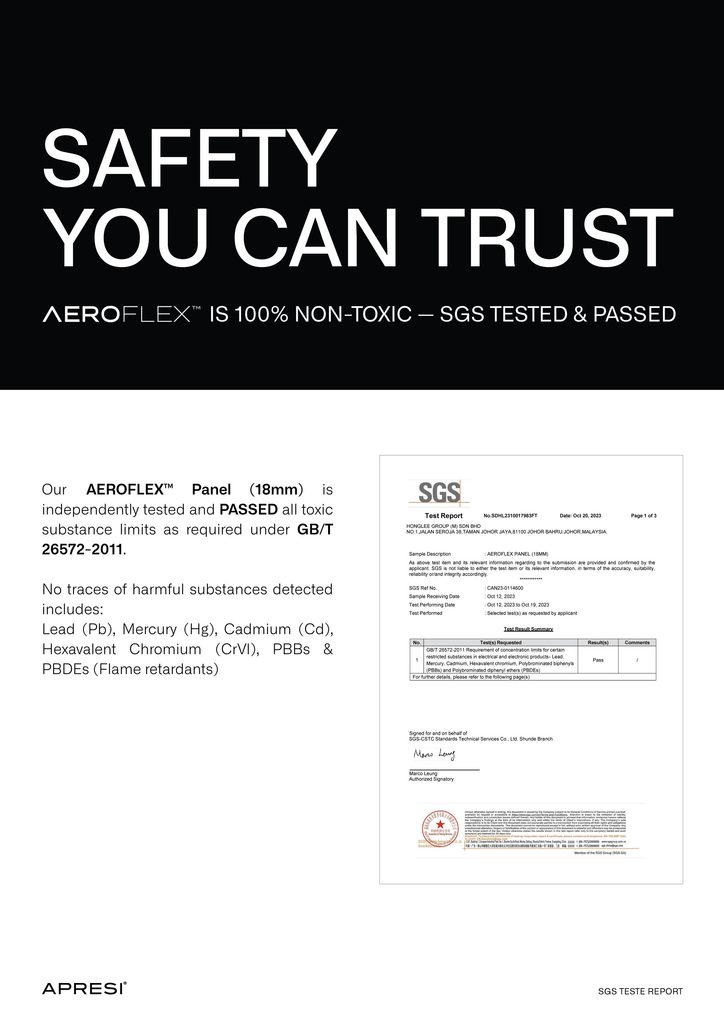
AEROFLEX ® has also been independently tested by SGS and passed all toxic substance limits under GB/T 26572-2011.
What can you do today?
Whatever panels you choose, these habits help:
| Ask for the test report | Any supplier can say “safe”. Look for a named lab, a test method and a number. |
| Ventilate | Open windows for 15 to 20 minutes a day, especially after new furniture arrives. |
| Be careful in bedrooms and children’s rooms. | These are the rooms where low-emission materials matter most. |
| Don’t trust vague labels | “Eco”, “natural” and “non-toxic” are not measurements. |
The Bottom Line
Formaldehyde isn’t a scare story, it’s a measurable chemical with measurable limits, and Europe has just cut those limits in half.
When you choose materials for the spaces your family lives in, choose the ones that can prove their numbers.
APRESI KL
Mon – Fri: 8:30am – 5:30pm
Sat: 9:00am – 12:30pm
map
APRESI JB
Mon – Fri: 9am – 6pm
Sat: 10am – 5pm
Sun: 10am – 4pm
map
APRESI SG
Mon – Fri: 10am – 7pm
Sat: 11am – 6pm
Sun: 11am – 5pm
map